'%3e%3cpath%20d='M136%2043.0521C135.893%2043.4991%20131.298%2041.3697%20123.51%2041.5186C120.787%2041.5712%20109.626%2040.8001%20104.06%2049.4228C101.316%2053.664%20102.266%2056.2491%20100.601%2061.5769C95.2065%2078.8661%2087.7394%2075.1856%2062.5302%2088.5228C54.5058%2092.764%2045.1595%20101.562%2043.5589%20103.087C31.9403%20114.163%2025.1664%20123.189%2025.1521%20123.171C25.1378%20123.162%2034.1912%20104.357%2047.7676%2082.7655C60.6795%2062.2429%2063.8235%2070.0769%2079.7722%2049.1336C81.7015%2046.6011%2084.8526%2037.6805%2089.683%2036.1032C93.6345%2034.815%2098.6148%2036.6114%20100.065%2038.5568C101.044%2039.8712%20101.459%2040.765%20103.831%2040.4408C110.048%2039.5996%20113.613%2039.8625%20115.492%2039.7748C116.95%2039.7047%20119.751%2039.915%20120.509%2039.9939C130.419%2040.9753%20136.15%2042.4563%20136.007%2043.0434L136%2043.0521Z'%20fill='%23127398'/%3e%3cpath%20d='M22.1867%2043.6392C30.3968%2055.0923%2031.5544%2062.348%2040.6506%2068.6923C45.9954%2072.4253%2053.4839%2075.4134%2058.2928%2075.5361C61.9084%2075.6325%2063.7305%2075.2557%2064.6023%2074.949C64.8524%2074.8614%2065.1025%2074.8351%2065.3597%2074.8263L76.0636%2070.6727C76.8068%2066.8871%2076.1637%2063.4784%2076.1065%2063.1892C75.0561%2058.0103%2072.3337%2053.3835%2070.5402%2051.2542C55.4561%2033.3428%2055.8062%2034.298%2046.5814%2028.0237C26.7884%2014.5902%20-1.22192%2021.3464%200.0428309%2022.0562C0.55016%2022.3454%2010.2394%2026.9634%2022.1867%2043.6392Z'%20fill='%23127398'/%3e%3cpath%20d='M79.8366%2044.0161C81.33%2046.4784%2083.4093%2051.5784%2083.7666%2056.8975C83.7952%2057.3094%2084.1667%2064.0393%2080.4654%2068.4733C78.5004%2070.8217%2076.2281%2071.5403%2075.585%2071.7506C61.487%2076.5264%2028.4319%20116.196%2023.3515%20133.494C23.2229%20133.941%2022.6227%20136.026%2022.5655%20136C22.3797%20135.921%2023.5373%20120.753%2028.925%20106.303C28.925%20106.303%2033.7196%2090.5295%2046.7387%2073.9326C49.1896%2070.8042%2052.8052%2067.0362%2052.8052%2067.0362C54.2414%2065.1434%2059.8006%2068.3068%2066.1887%2068.482C69.9401%2068.5872%2073.2198%2067.6846%2073.2055%2067.3604C73.2055%2067.2377%2073.0698%2067.0712%2072.8911%2066.9047C72.3195%2066.3702%2071.5907%2066.1423%2070.8761%2066.2475C69.9758%2066.379%2068.1323%2066.3877%2064.5738%2065.5903C59.8435%2064.5212%2052.8481%2060.096%2048.0534%2055.364C39.9076%2047.3109%2039.7147%2039.9238%2033.1051%2026.9985C23.4944%208.17586%2014.0767%201.32328%2014.0767%201.32328C17.285%20-1.64734%2041.451%20-0.788575%2059.229%2016.3692C67.5177%2024.3697%2067.2962%2023.3619%2079.8366%2044.0073V44.0161Z'%20fill='%23EF9920'/%3e%3c/g%3e%3cdefs%3e%3cclipPath%20id='clip0_882_3310'%3e%3crect%20width='136'%20height='136'%20fill='white'/%3e%3c/clipPath%3e%3c/defs%3e%3c/svg%3e)
People typically build wealth through equity.
Business owners benefit directly from the uncapped access to the income of their companies. Startup founders and early employees create significant wealth when their companies are acquired or go public. The same is true for employees at large public companies who receive RSUs, even if they decide to auto-sell every share as soon as it vests.
The last group sometimes misses the fact that their success is still caused by equity despite them choosing to auto-sell their shares.
Consider this example,
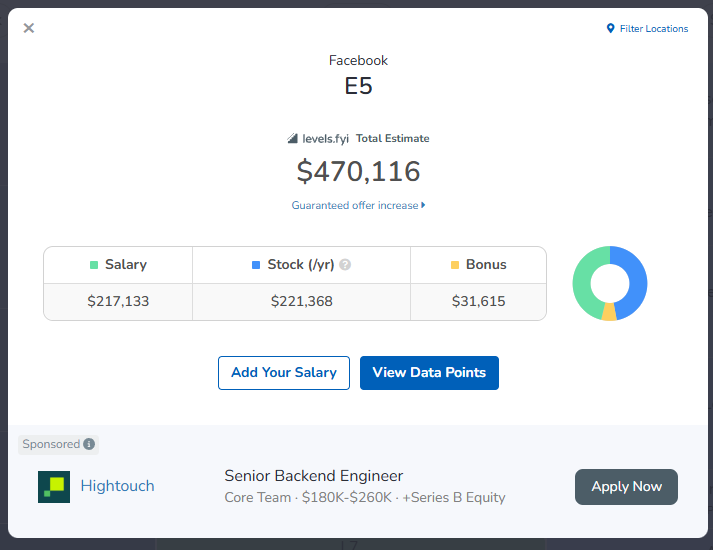
Senior Software Engineer at Meta/Facebook
Total comp = $470K/year, where $221K (47%) is equity
Equity grant has a four-year vesting schedule
The engineer is not comfortable taking the company risk and enrolls in autosale
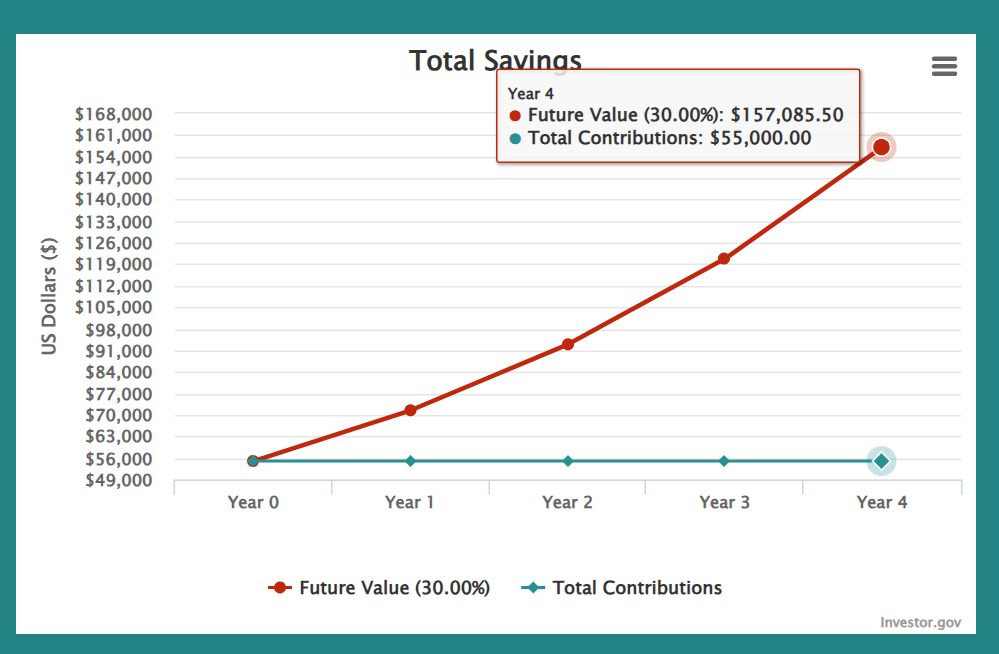
When $221K is granted, it is converted into META shares. These shares vest over four years, with 25% of the grant vesting each year. This gives the stock time to appreciate before it vests and is sold automatically. By the end of the four years, the engineer’s initial grant of $221K often becomes significantly more valuable. Each annual portion, initially worth $55,250 ($221K / 4), can grow to $157,000.
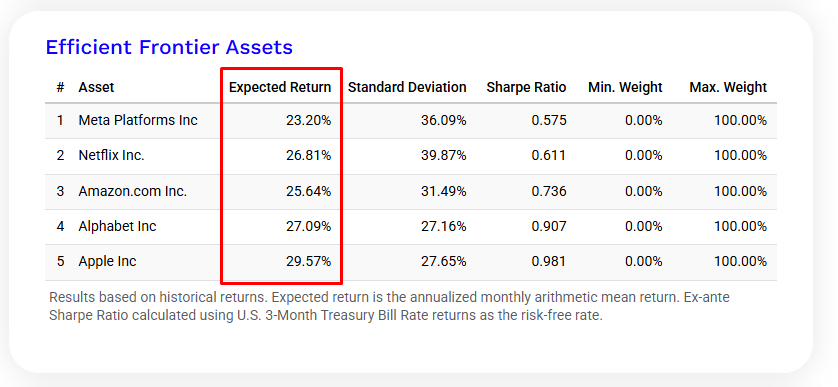
Why? Because these successful companies have been growing much faster than the market. Below is average annual growth of FAANG companies stock for the the last 10 years (2017-2026):
🟠 META - 23.20% annual growth
🟠 AMZN - 25.64% annual growth
🟠 AAPL - 29.57% annual growth
🟠 NFLX - 26.81% annual growth
🟠 GOOG - 27.09% annual growth
DISCLAIMER: Company examples are used for illustrative purposes and are not recommendations to buy, sell, or hold any security.
If the engineer stays for more than four years and has multiple grants, their compensation in one year can look like this:
$217K: Base salary
$31K: Annual target bonus
$157K: Equity grant #1, appreciated over four years
$120K: Equity grant #2, appreciated over three years
$92K: Equity grant #3, appreciated over two years
$71K: Equity grant #4, appreciated over one year
Total = $688K
If, instead of equity, the engineer had received cash ($55K/year), or if the company’s stock had remained flat, their total compensation after four years would have been $468K. That’s $220K less pre-tax, or approximately $119.3K less after tax.
Why: At $468K/year in total compensation, their take-home pay would be approximately $319.2K/year. At $688K/year, their take-home pay would be approximately $438.5K/year. That’s a difference of $119.3K per year.
Now imagine that this engineer remains employed for 10 years and manages their wealth well by investing the additional income in a diversified portfolio earning a 7% annual return. Over 10 years, that additional income could generate approximately $1.6M in additional wealth.
This extra net worth is the result of the RSUs appreciating between grant and vesting, even if the engineer enrolled in auto-sale and sold the shares immediately upon vesting.
This math works in the opposite direction as well
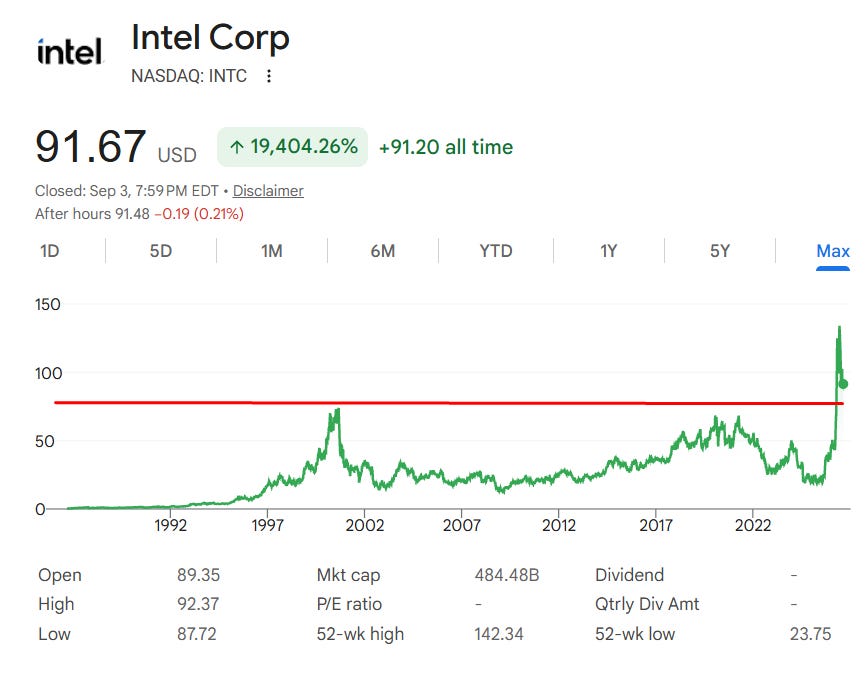
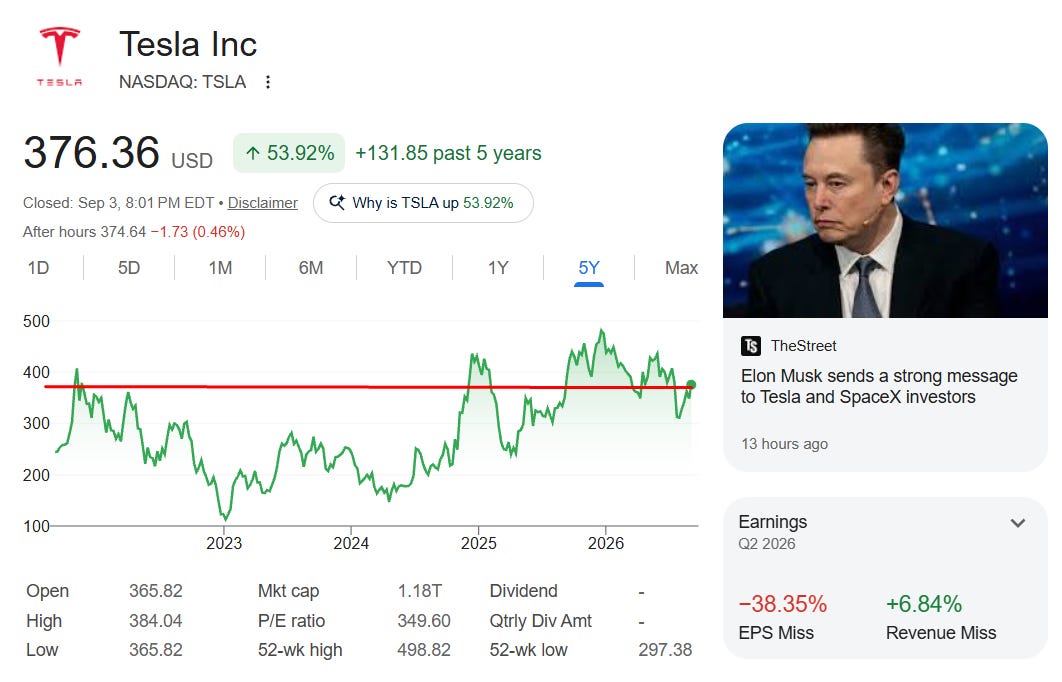
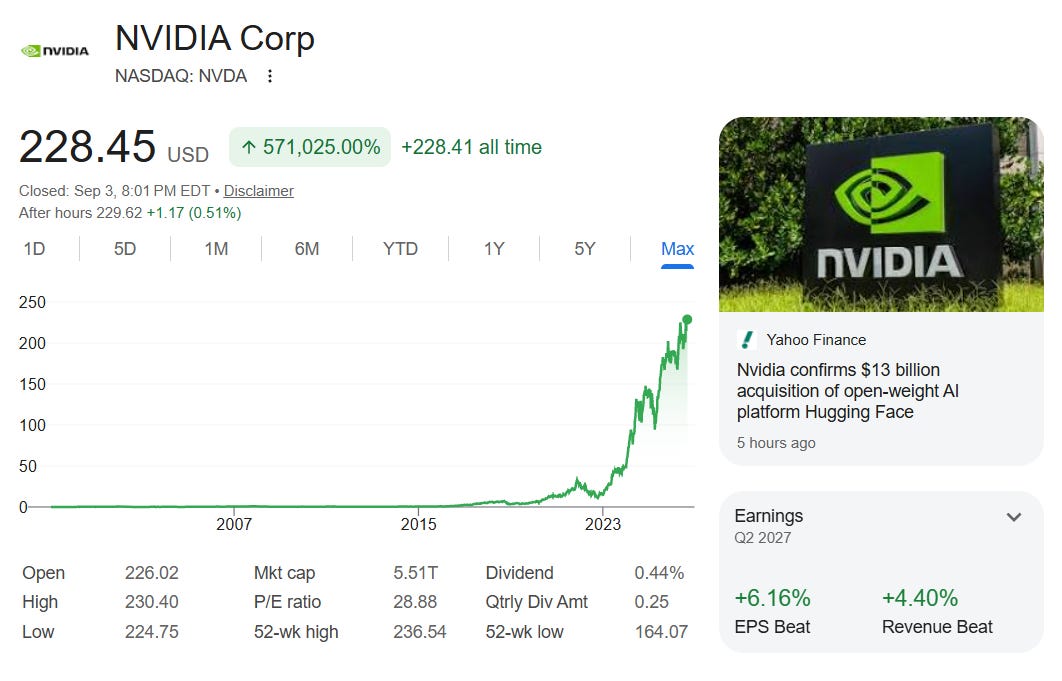
If you join a stagnating company or a company whose stock has appreciated significantly in recent years (Intel in 2000, Tesla in 2021, or Nvidia in 2023), and you receive equity compensation, there is a chance that your actual compensation will end up being lower for exactly the same reason: by the time the stock vests, it may be worth less.
The company itself might be great, but if its stock is overvalued when your equity is granted, that can negatively affect your personal wealth building trajectory.
What is the takeaway?
If you are closer to retirement, this is a good reminder that our net worth is not always strictly determined by our talent, work ethic, and knowledge. While these qualities are positively correlated with wealth, external factors (including the performance of your employer’s stock) can also have a significant impact, especially in tech.
If you’re still building wealth and plan to do so while staying employed, understanding how equity compensation works (especially at early-stage companies) is important.
About The Author
Alex Sukhanov, founder of Nauma, a financial planning platform built for people in tech and high-net-worth families. Alex previously worked at Google and started Nauma to help more people in tech make better financial decisions and achieve more in their lives. You can reach out to Alex on linkedin.
Nauma is supported entirely by its users: no commissions, no affiliate incentives, and no financial products to sell. Built as an independent software platform rather than a traditional advisory firm, Nauma is designed to give tech professionals the tools and modeling clarity to evaluate their own equity, tax, and retirement scenarios.

DISCLAIMER: For educational and illustrative purposes only. Tickers and historical performance figures (2017–2026) are presented for structural context, not as investment advice or endorsements. Past performance is no guarantee of future results. Hypothetical growth projections do not reflect actual market returns. Nauma is a financial technology company, not a registered investment adviser.