'%3e%3cpath%20d='M136%2043.0521C135.893%2043.4991%20131.298%2041.3697%20123.51%2041.5186C120.787%2041.5712%20109.626%2040.8001%20104.06%2049.4228C101.316%2053.664%20102.266%2056.2491%20100.601%2061.5769C95.2065%2078.8661%2087.7394%2075.1856%2062.5302%2088.5228C54.5058%2092.764%2045.1595%20101.562%2043.5589%20103.087C31.9403%20114.163%2025.1664%20123.189%2025.1521%20123.171C25.1378%20123.162%2034.1912%20104.357%2047.7676%2082.7655C60.6795%2062.2429%2063.8235%2070.0769%2079.7722%2049.1336C81.7015%2046.6011%2084.8526%2037.6805%2089.683%2036.1032C93.6345%2034.815%2098.6148%2036.6114%20100.065%2038.5568C101.044%2039.8712%20101.459%2040.765%20103.831%2040.4408C110.048%2039.5996%20113.613%2039.8625%20115.492%2039.7748C116.95%2039.7047%20119.751%2039.915%20120.509%2039.9939C130.419%2040.9753%20136.15%2042.4563%20136.007%2043.0434L136%2043.0521Z'%20fill='%23127398'/%3e%3cpath%20d='M22.1867%2043.6392C30.3968%2055.0923%2031.5544%2062.348%2040.6506%2068.6923C45.9954%2072.4253%2053.4839%2075.4134%2058.2928%2075.5361C61.9084%2075.6325%2063.7305%2075.2557%2064.6023%2074.949C64.8524%2074.8614%2065.1025%2074.8351%2065.3597%2074.8263L76.0636%2070.6727C76.8068%2066.8871%2076.1637%2063.4784%2076.1065%2063.1892C75.0561%2058.0103%2072.3337%2053.3835%2070.5402%2051.2542C55.4561%2033.3428%2055.8062%2034.298%2046.5814%2028.0237C26.7884%2014.5902%20-1.22192%2021.3464%200.0428309%2022.0562C0.55016%2022.3454%2010.2394%2026.9634%2022.1867%2043.6392Z'%20fill='%23127398'/%3e%3cpath%20d='M79.8366%2044.0161C81.33%2046.4784%2083.4093%2051.5784%2083.7666%2056.8975C83.7952%2057.3094%2084.1667%2064.0393%2080.4654%2068.4733C78.5004%2070.8217%2076.2281%2071.5403%2075.585%2071.7506C61.487%2076.5264%2028.4319%20116.196%2023.3515%20133.494C23.2229%20133.941%2022.6227%20136.026%2022.5655%20136C22.3797%20135.921%2023.5373%20120.753%2028.925%20106.303C28.925%20106.303%2033.7196%2090.5295%2046.7387%2073.9326C49.1896%2070.8042%2052.8052%2067.0362%2052.8052%2067.0362C54.2414%2065.1434%2059.8006%2068.3068%2066.1887%2068.482C69.9401%2068.5872%2073.2198%2067.6846%2073.2055%2067.3604C73.2055%2067.2377%2073.0698%2067.0712%2072.8911%2066.9047C72.3195%2066.3702%2071.5907%2066.1423%2070.8761%2066.2475C69.9758%2066.379%2068.1323%2066.3877%2064.5738%2065.5903C59.8435%2064.5212%2052.8481%2060.096%2048.0534%2055.364C39.9076%2047.3109%2039.7147%2039.9238%2033.1051%2026.9985C23.4944%208.17586%2014.0767%201.32328%2014.0767%201.32328C17.285%20-1.64734%2041.451%20-0.788575%2059.229%2016.3692C67.5177%2024.3697%2067.2962%2023.3619%2079.8366%2044.0073V44.0161Z'%20fill='%23EF9920'/%3e%3c/g%3e%3cdefs%3e%3cclipPath%20id='clip0_882_3310'%3e%3crect%20width='136'%20height='136'%20fill='white'/%3e%3c/clipPath%3e%3c/defs%3e%3c/svg%3e)
Geo FIRE for Tech Workers
Geographic Arbitrage FIRE — Retire Earlier by Leveraging High-Income Earnings in Lower-Cost Countries
Geo FIRE — geographic arbitrage FIRE — is the strategy of earning income at a high-cost-of-living level (typically in the United States) and retiring in a lower-cost country or city where the same portfolio sustains a dramatically richer lifestyle. A $2,000,000 portfolio that produces $80,000/year at a 4% withdrawal rate provides a modest life in San Francisco and a very comfortable life in Medellín, Lisbon, or Chiang Mai. The dollar-to-local-currency purchasing power advantage can reduce effective cost of living by 40–70%, which either reduces the required portfolio, accelerates the timeline to retirement, or both.
For tech workers who spent a decade accumulating wealth at Bay Area or Seattle compensation levels, Geo FIRE is among the highest-leverage early retirement strategies available. It is not simply "moving somewhere cheaper" — it is a deliberate financial optimization that converts a concentration of earned income in a high-cost market into a lifetime of advantage in a lower-cost one.
The Geographic Arbitrage Math
The impact of Geo FIRE on the required portfolio size is substantial. At a 4% withdrawal rate:
- San Francisco, $200,000/year spend: $5,000,000 portfolio required
- Austin or Denver, $110,000/year spend: $2,750,000 portfolio required
- Lisbon, Portugal, $65,000/year spend: $1,625,000 portfolio required
- Medellín, Colombia, $45,000/year spend: $1,125,000 portfolio required
- Chiang Mai, Thailand, $35,000/year spend: $875,000 portfolio required
The difference between retiring in San Francisco and retiring in Lisbon is $3,375,000 of required portfolio — which at $150,000/year in annual savings represents over 22 years of additional accumulation. For a tech worker with strong international interests and flexibility about location, Geo FIRE can compress a 20-year FIRE plan into a 10-year plan without any change in lifestyle quality — and often with a meaningfully improved quality of life.
Popular Geo FIRE Destinations for Tech Workers
The best Geo FIRE destinations combine affordable cost of living, reliable infrastructure, quality healthcare, strong expat communities, and geographic or cultural appeal. The most common choices for tech workers from Bay Area and Seattle:
- Portugal (Lisbon, Porto, Algarve). Consistently the most popular Geo FIRE destination for American tech workers. A couple can live well in Lisbon — including housing, healthcare, travel, and dining — for $50,000–$75,000/year. Portugal's NHR (Non-Habitual Resident) tax regime historically provided a flat 20% tax rate on Portuguese-source income and potential exemptions on foreign income, though the NHR rules have changed and alternatives now apply. EU residency, English prevalence, exceptional food, and high safety ratings make it a top destination. Visa: D7 Passive Income Visa for those with sufficient investment or pension income.
- Spain (Barcelona, Valencia, Seville, Málaga). Similar appeal to Portugal with larger cities, richer culture, and slightly higher cost of living in major cities. A couple lives well in Valencia for $55,000–$80,000/year; Barcelona is closer to $70,000–$100,000. Spain's Non-Dom tax regime (Beckham Law, amended) offers flat-rate tax treatment for inbound residents under certain conditions. Visa: Non-Lucrative Visa requires proof of passive income but allows residency without local employment.
- Colombia (Medellín, Cartagena, Bogotá). Medellín in particular has become a major destination for early retirees and digital nomads. A couple lives well for $35,000–$55,000/year. Medellín's spring-like eternal climate, modern infrastructure, and active expat community make it particularly welcoming. Colombia's pensionado visa is available to those receiving at least 3x the minimum wage in monthly income — approximately $750/month. Colombia taxes worldwide income for residents staying more than 183 days, so tax planning requires care.
- Mexico (Mexico City, Oaxaca, San Miguel de Allende, Puerto Vallarta). The most geographically accessible destination for U.S.-based Geo FIRE retirees. A couple lives well in Mexico City (CDMX) for $35,000–$55,000/year. Mexico City in particular has become extraordinarily popular with tech workers for its world-class food, culture, and very low cost of living relative to quality. Residency options include the Temporary Resident Visa and Permanent Resident Visa, both available to those with sufficient income or savings. Mexico's tax treaty with the U.S. limits some double-taxation exposure.
- Thailand (Chiang Mai, Bangkok, Koh Samui). Among the lowest cost-of-living Geo FIRE destinations at Western-comfort standards. A couple lives well in Chiang Mai for $25,000–$40,000/year including housing, food, healthcare, and travel. Thailand's Thailand Elite Visa provides 5–20 year renewable long-stay privileges. Tax planning requires careful attention: Thailand moved to a worldwide income tax model for residents from 2024, affecting money remitted to Thailand.
- Panama (Panama City, Boquete, Bocas del Toro). The most tax-favorable Geo FIRE destination for Americans due to a territorial tax system: Panama taxes only Panama-source income, leaving foreign investment income (U.S. dividends, capital gains from U.S. investments) untaxed in Panama. Combined with the U.S. Foreign Earned Income Exclusion for any income earned locally, Panama offers a very low effective tax rate. The Pensionado Visa is one of the world's most generous retiree visa programs, offering 20–50% discounts on healthcare, transportation, and entertainment with a lifetime visa for those receiving $1,000+/month in pension or investment income. A couple lives well for $35,000–$55,000/year.
- Lower-cost U.S. cities (internal Geo FIRE). Moving within the U.S. to lower-cost markets is the most common form of Geo FIRE for tech workers who prefer to remain in the U.S. Leaving San Francisco or Seattle for Austin, Dallas, Nashville, Phoenix, or Raleigh reduces annual spending by $50,000–$100,000 for a couple — without the complications of foreign taxation, healthcare abroad, or language barriers. This form of geographic arbitrage also eliminates California state income tax (13.3% top rate) and, depending on the destination, may reduce state capital gains tax exposure.
The Tax Complexity of International Geo FIRE
Geo FIRE outside the United States introduces tax complexity that does not exist in domestic relocation. U.S. citizens and permanent residents are taxed on worldwide income regardless of where they live — the U.S. is one of only two countries (with Eritrea) that taxes citizens living abroad. This means leaving the U.S. does not eliminate U.S. tax obligations. The key U.S. tax considerations for international Geo FIRE:
- You still file a U.S. tax return. Every U.S. citizen or permanent resident living abroad must file a U.S. federal tax return reporting worldwide income, regardless of whether tax is owed. The Foreign Earned Income Exclusion (FEIE) can exclude up to $130,000 (indexed, 2026) of foreign earned income — but Geo FIRE retirees typically have investment income rather than earned income, so the FEIE provides limited benefit for portfolio withdrawals, dividends, or capital gains.
- Foreign Tax Credit. If you pay income tax in your country of residence on income also taxed by the U.S., you can claim a Foreign Tax Credit on your U.S. return to offset the U.S. tax owed. In countries with higher tax rates than the U.S. (most of Europe), the credit eliminates or nearly eliminates your U.S. liability. In countries with very low or no income tax (Panama, UAE, Cayman Islands), you pay primarily U.S. tax with minimal foreign offset.
- FBAR and FATCA reporting. If you hold $10,000+ in foreign bank accounts, you must file an FBAR (FinCEN Form 114) annually. FATCA (Form 8938) has additional reporting requirements for foreign financial assets above $200,000 (married filing jointly, abroad). Failure to file carries significant penalties. This reporting is purely informational — it does not create additional tax — but it is a compliance obligation that every international Geo FIRE retiree must manage.
- State taxes after leaving California. California aggressively pursues former residents who claim they have relocated. To terminate California residency and stop paying California income and capital gains tax (up to 13.3% on ordinary income and gains), you must establish domicile in a new state or country and sever all significant connections to California: driver's license, voter registration, professional licenses, club memberships, primary residence. If you leave California in a high RSU vesting year without properly terminating residency, California will attempt to tax the RSU income as California-source.
- Controlling taxable income for U.S. purposes. Many Geo FIRE retirees structure their U.S. taxable income carefully — drawing from Roth accounts (no U.S. tax on qualified withdrawals) and managing the realization of long-term capital gains to stay in the 0% or 15% federal bracket. At the 0% federal LTCG threshold (approximately $98,900 for married filing jointly in 2026) and no state income tax (either due to no-state-income-tax relocation or because you have left the U.S.), a Geo FIRE retiree in a low-tax country can receive large portfolio withdrawals at very low total tax rates.
- Consider renouncing U.S. citizenship only as a last resort. Some very high-net-worth Geo FIRE individuals renounce U.S. citizenship to eliminate U.S. tax obligations entirely. This is an irreversible, complex, and costly process — including a potential exit tax on unrealized gains if net worth exceeds the threshold (approximately $2,000,000). For most Geo FIRE tech workers, the complexity and permanence of renunciation is not justified by the tax savings, especially since careful income management can reduce U.S. effective tax rates to very low levels even while living abroad.
Healthcare Abroad: The Geo FIRE Advantage
One of the strongest arguments for international Geo FIRE is healthcare cost. The United States has among the highest healthcare costs in the world; most popular Geo FIRE destinations have high-quality care at a fraction of the U.S. price. A comprehensive private health insurance plan for a 40-year-old couple in Portugal, Spain, or Mexico costs $400–$1,200 per month — compared to $2,000–$4,000 per month in the U.S. on the ACA marketplace. The annual savings of $10,000–$30,000 materially reduces the required portfolio.
Quality of care in the top Geo FIRE destinations is generally high for routine and specialist care, though it can be uneven for highly specialized procedures. Most serious international Geo FIRE retirees maintain medevac insurance and a plan for returning to the U.S. (or traveling to a major medical hub) for major procedures. For retirees under 65 who might otherwise spend decades paying full U.S. ACA premiums, the healthcare cost advantage alone can justify international Geo FIRE.
Practical Considerations: What Most Geo FIRE Articles Do Not Tell You
Beyond taxes and healthcare, several practical realities affect Geo FIRE execution:
- Language. Functional daily life in most Geo FIRE destinations requires at least basic local language. In Anglophone areas of Portugal, Spain, and Mexico City, English is widely spoken — but dependence on translators for medical care, legal matters, and banking creates genuine vulnerability.
- Visa renewability. Most retiree and passive income visas require annual or biennial renewal and proof of continued income. Visa rules change — Portugal's NHR was modified, Thailand changed its income tax rules in 2024. Build in the assumption that the tax and visa framework today will not be identical in 15 years.
- Access to U.S. financial infrastructure. Many U.S. brokerages — including Vanguard, Fidelity, and Schwab — restrict account access and trading for clients who establish foreign residency. Schwab International has historically been the most expat-friendly major U.S. brokerage. Establish your brokerage accounts and understand your platform's foreign residency policy before departing.
- Banking and money movement. Moving money from U.S. accounts to foreign bank accounts for living expenses requires a reliable system: Wise, Charles Schwab's no-foreign-transaction-fee debit card, or maintaining a U.S. account for international ATM withdrawals. Establish the infrastructure before you need it.
- Return optionality. The strongest Geo FIRE plans preserve the ability to return to the U.S. if needed — for family emergencies, health events, or simply personal preference. Do not structure the financial plan in ways that make return prohibitively expensive or complex. Keep the taxable brokerage account in the U.S., maintain health insurance that covers U.S. emergency care, and avoid renouncing citizenship or green card status without deep deliberation.
Frequently Asked Questions
Model Your Geo FIRE Strategy
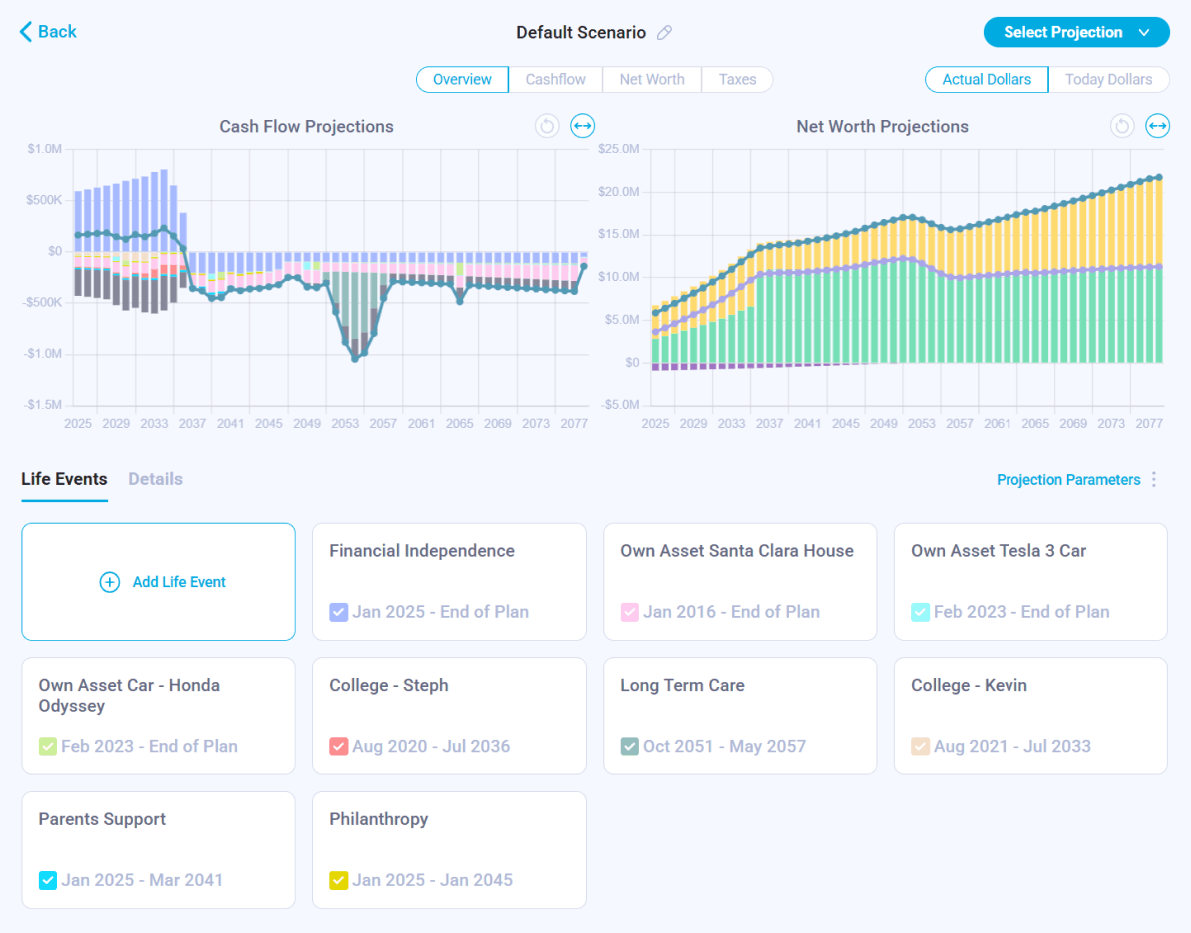
Nauma builds your personalized Geo FIRE projection — showing how different destination costs affect your required portfolio, withdrawal sequence, U.S. tax exposure, and the exact year you can make the move.
Get Started for Free