'%3e%3cpath%20d='M136%2043.0521C135.893%2043.4991%20131.298%2041.3697%20123.51%2041.5186C120.787%2041.5712%20109.626%2040.8001%20104.06%2049.4228C101.316%2053.664%20102.266%2056.2491%20100.601%2061.5769C95.2065%2078.8661%2087.7394%2075.1856%2062.5302%2088.5228C54.5058%2092.764%2045.1595%20101.562%2043.5589%20103.087C31.9403%20114.163%2025.1664%20123.189%2025.1521%20123.171C25.1378%20123.162%2034.1912%20104.357%2047.7676%2082.7655C60.6795%2062.2429%2063.8235%2070.0769%2079.7722%2049.1336C81.7015%2046.6011%2084.8526%2037.6805%2089.683%2036.1032C93.6345%2034.815%2098.6148%2036.6114%20100.065%2038.5568C101.044%2039.8712%20101.459%2040.765%20103.831%2040.4408C110.048%2039.5996%20113.613%2039.8625%20115.492%2039.7748C116.95%2039.7047%20119.751%2039.915%20120.509%2039.9939C130.419%2040.9753%20136.15%2042.4563%20136.007%2043.0434L136%2043.0521Z'%20fill='%23127398'/%3e%3cpath%20d='M22.1867%2043.6392C30.3968%2055.0923%2031.5544%2062.348%2040.6506%2068.6923C45.9954%2072.4253%2053.4839%2075.4134%2058.2928%2075.5361C61.9084%2075.6325%2063.7305%2075.2557%2064.6023%2074.949C64.8524%2074.8614%2065.1025%2074.8351%2065.3597%2074.8263L76.0636%2070.6727C76.8068%2066.8871%2076.1637%2063.4784%2076.1065%2063.1892C75.0561%2058.0103%2072.3337%2053.3835%2070.5402%2051.2542C55.4561%2033.3428%2055.8062%2034.298%2046.5814%2028.0237C26.7884%2014.5902%20-1.22192%2021.3464%200.0428309%2022.0562C0.55016%2022.3454%2010.2394%2026.9634%2022.1867%2043.6392Z'%20fill='%23127398'/%3e%3cpath%20d='M79.8366%2044.0161C81.33%2046.4784%2083.4093%2051.5784%2083.7666%2056.8975C83.7952%2057.3094%2084.1667%2064.0393%2080.4654%2068.4733C78.5004%2070.8217%2076.2281%2071.5403%2075.585%2071.7506C61.487%2076.5264%2028.4319%20116.196%2023.3515%20133.494C23.2229%20133.941%2022.6227%20136.026%2022.5655%20136C22.3797%20135.921%2023.5373%20120.753%2028.925%20106.303C28.925%20106.303%2033.7196%2090.5295%2046.7387%2073.9326C49.1896%2070.8042%2052.8052%2067.0362%2052.8052%2067.0362C54.2414%2065.1434%2059.8006%2068.3068%2066.1887%2068.482C69.9401%2068.5872%2073.2198%2067.6846%2073.2055%2067.3604C73.2055%2067.2377%2073.0698%2067.0712%2072.8911%2066.9047C72.3195%2066.3702%2071.5907%2066.1423%2070.8761%2066.2475C69.9758%2066.379%2068.1323%2066.3877%2064.5738%2065.5903C59.8435%2064.5212%2052.8481%2060.096%2048.0534%2055.364C39.9076%2047.3109%2039.7147%2039.9238%2033.1051%2026.9985C23.4944%208.17586%2014.0767%201.32328%2014.0767%201.32328C17.285%20-1.64734%2041.451%20-0.788575%2059.229%2016.3692C67.5177%2024.3697%2067.2962%2023.3619%2079.8366%2044.0073V44.0161Z'%20fill='%23EF9920'/%3e%3c/g%3e%3cdefs%3e%3cclipPath%20id='clip0_882_3310'%3e%3crect%20width='136'%20height='136'%20fill='white'/%3e%3c/clipPath%3e%3c/defs%3e%3c/svg%3e)
Liquid Net Worth
What Counts, What Doesn't, and Why It's the Number That Actually Determines When You Can Retire
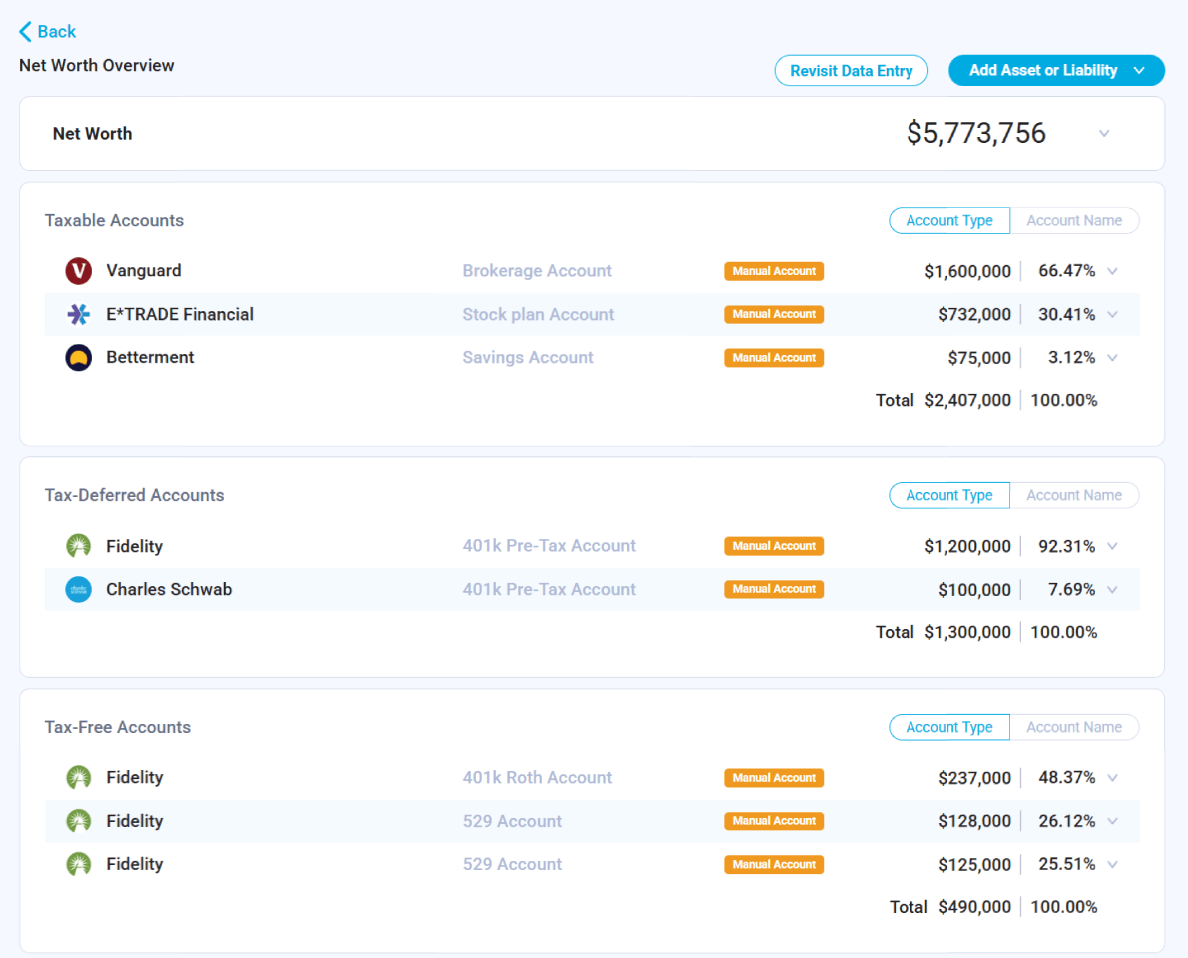
Liquid net worth is the subset of your total net worth that you can access and spend within days — without penalty, without waiting months for a sale to close, and without triggering steep taxes or early withdrawal penalties. It is the number that determines your real financial flexibility: whether you can weather a job loss, survive a bear market without selling at the wrong time, or actually retire early when your spreadsheet says you can.
Total net worth is a useful long-term scoreboard. Liquid net worth is the operational number — the one that governs what you can actually do today. Many tech workers with high total net worth discover, at a critical moment, that their liquid net worth is surprisingly small. Most of their wealth is in a primary residence, unvested RSUs, or a traditional 401(k) with early withdrawal penalties. For a broader look at how net worth is structured across account types and asset classes, see the Net Worth guide.
What Counts as Liquid
Not all assets belong in your liquid net worth. The threshold is simple: can you convert this to spendable cash within a few business days without a meaningful penalty or discount?
Fully Liquid
- Cash — checking and savings accounts: Immediately accessible. No restriction, no tax event on withdrawal.
- Money market funds: Redeemable within one business day. Treat as cash for liquidity purposes.
- Taxable brokerage accounts: Stocks, ETFs, and mutual funds settle in one business day. Selling creates a capital gains tax event, but the proceeds are yours to use freely — no penalty, no restriction on amount or timing.
- Treasury bills and short-term government bonds: Highly liquid with minimal bid-ask spread. Effectively equivalent to cash in most financial planning contexts.
- Roth IRA contributions (not earnings): The amount you contributed to a Roth IRA — not the investment gains — can be withdrawn at any time, at any age, with no income tax and no penalty. This makes Roth contributions a liquid asset. Roth earnings have different rules and are not liquid before age 59½ without penalty.
Not Liquid — Even if They Feel Like Wealth
- Traditional 401(k) and traditional IRA: Before age 59½, withdrawals trigger ordinary income tax plus a 10% early withdrawal penalty (with limited exceptions). The penalty alone makes these semi-liquid at best. They are retirement assets, not liquid assets.
- Primary residence and real estate: Selling takes months. A HELOC provides some liquidity but is debt, adds risk, and can be frozen by the lender during economic downturns — exactly when you need liquidity most.
- Unvested RSUs and stock options: Subject to vesting schedules and employment conditions. No market until they vest. Not liquid by any reasonable definition.
- 529 plans: Withdrawals for non-qualified expenses incur income tax plus a 10% penalty on the earnings portion. Not liquid.
- Private company equity and pre-IPO stock: No market, no price, no liquidity until a liquidity event occurs — which may be years away or never.
- CDs: Early withdrawal penalty applies. Not fully liquid.
Why Liquid Net Worth Is the Number That Actually Matters
Emergency Resilience
The standard 3–6 month emergency fund is really a liquid net worth floor. A tech worker who loses their job cannot pay rent with home equity or unvested RSUs. The cash and taxable brokerage assets that can be deployed immediately without penalty determine how long you can survive a gap in income without financial damage. For higher earners with variable compensation — bonuses, RSUs, consulting income — a larger liquid buffer is typically appropriate.
Early Retirement Feasibility
The FIRE number — typically 25x annual expenses under the 4% rule — is specifically a liquid and investable net worth target. A $3,000,000 net worth that is 60% in a primary home and 40% in a traditional 401(k) subject to early withdrawal penalties is not the same as $3,000,000 in a taxable brokerage account. Reaching your FIRE number in illiquid or inaccessible assets does not mean you can retire. It means you have a high balance sheet number with a retirement date that is still years away.
Sequence-of-Returns Protection
In early retirement, the biggest risk is being forced to sell equities during a bear market to fund living expenses. Maintaining one to three years of expenses in liquid, non-equity assets — cash, short-term bonds, money market — means a 40% stock market drop does not immediately require selling stocks at depressed prices. This is a liquid net worth strategy, not a total net worth strategy.
Tax Planning Flexibility
Roth conversions, tax-loss harvesting, and gain harvesting in the 0% bracket all require liquid taxable accounts to execute. If all of your wealth is locked in retirement accounts, you lose the optionality that makes pre-retirement tax planning valuable. Liquid net worth in taxable accounts is the currency of sophisticated tax strategy.
How to Calculate Your Liquid Net Worth
- Add up all cash and cash equivalents (checking, savings, money market)
- Add the current market value of all taxable brokerage account holdings
- Add the total of all Roth IRA contributions (check Form 5498 or your broker's basis tracking — do not include earnings)
- Subtract any liabilities that must be paid in the near term (credit card balances, margin loans if applicable)
The result is your liquid net worth. Compare it to your total net worth to see how large the gap is — and to understand what portion of your stated wealth you can actually deploy.
What a Healthy Liquid Net Worth Looks Like
There is no universal target, but some useful benchmarks for tech workers:
- Accumulation phase: Liquid net worth of 12–24 months of total expenses at minimum, plus whatever is in taxable brokerage accounts. The goal is to avoid being forced to tap retirement accounts at a penalty before you are ready.
- Approaching early retirement: Liquid investable assets (taxable brokerage + accessible Roth contributions) sufficient to cover 25x annual expenses — the FIRE number that actually enables retirement, separate from home equity and illiquid holdings.
- Early retirement: One to three years of living expenses in cash or short-term bonds, plus the full equity portfolio in taxable and accessible accounts. This buffer funds living expenses in a down market without forced equity sales.
The most common structural problem for senior tech workers: liquid net worth that is a small fraction of total net worth, because compensation has been heavily RSU-based (illiquid until vest, then often held as concentrated stock) and savings have gone primarily into a 401(k) (inaccessible without penalty until 59½). Building liquid net worth deliberately — by directing RSU proceeds to taxable brokerage accounts rather than spending or concentrating — is an explicit financial planning goal, not a default outcome of high compensation.
Frequently Asked Questions
See Your Liquid Net Worth Alongside the Full Picture
Nauma breaks down your net worth by liquidity and tax treatment — so you know not just what you have, but what you can actually deploy and when.
Get Started for Free