'%3e%3cpath%20d='M136%2043.0521C135.893%2043.4991%20131.298%2041.3697%20123.51%2041.5186C120.787%2041.5712%20109.626%2040.8001%20104.06%2049.4228C101.316%2053.664%20102.266%2056.2491%20100.601%2061.5769C95.2065%2078.8661%2087.7394%2075.1856%2062.5302%2088.5228C54.5058%2092.764%2045.1595%20101.562%2043.5589%20103.087C31.9403%20114.163%2025.1664%20123.189%2025.1521%20123.171C25.1378%20123.162%2034.1912%20104.357%2047.7676%2082.7655C60.6795%2062.2429%2063.8235%2070.0769%2079.7722%2049.1336C81.7015%2046.6011%2084.8526%2037.6805%2089.683%2036.1032C93.6345%2034.815%2098.6148%2036.6114%20100.065%2038.5568C101.044%2039.8712%20101.459%2040.765%20103.831%2040.4408C110.048%2039.5996%20113.613%2039.8625%20115.492%2039.7748C116.95%2039.7047%20119.751%2039.915%20120.509%2039.9939C130.419%2040.9753%20136.15%2042.4563%20136.007%2043.0434L136%2043.0521Z'%20fill='%23127398'/%3e%3cpath%20d='M22.1867%2043.6392C30.3968%2055.0923%2031.5544%2062.348%2040.6506%2068.6923C45.9954%2072.4253%2053.4839%2075.4134%2058.2928%2075.5361C61.9084%2075.6325%2063.7305%2075.2557%2064.6023%2074.949C64.8524%2074.8614%2065.1025%2074.8351%2065.3597%2074.8263L76.0636%2070.6727C76.8068%2066.8871%2076.1637%2063.4784%2076.1065%2063.1892C75.0561%2058.0103%2072.3337%2053.3835%2070.5402%2051.2542C55.4561%2033.3428%2055.8062%2034.298%2046.5814%2028.0237C26.7884%2014.5902%20-1.22192%2021.3464%200.0428309%2022.0562C0.55016%2022.3454%2010.2394%2026.9634%2022.1867%2043.6392Z'%20fill='%23127398'/%3e%3cpath%20d='M79.8366%2044.0161C81.33%2046.4784%2083.4093%2051.5784%2083.7666%2056.8975C83.7952%2057.3094%2084.1667%2064.0393%2080.4654%2068.4733C78.5004%2070.8217%2076.2281%2071.5403%2075.585%2071.7506C61.487%2076.5264%2028.4319%20116.196%2023.3515%20133.494C23.2229%20133.941%2022.6227%20136.026%2022.5655%20136C22.3797%20135.921%2023.5373%20120.753%2028.925%20106.303C28.925%20106.303%2033.7196%2090.5295%2046.7387%2073.9326C49.1896%2070.8042%2052.8052%2067.0362%2052.8052%2067.0362C54.2414%2065.1434%2059.8006%2068.3068%2066.1887%2068.482C69.9401%2068.5872%2073.2198%2067.6846%2073.2055%2067.3604C73.2055%2067.2377%2073.0698%2067.0712%2072.8911%2066.9047C72.3195%2066.3702%2071.5907%2066.1423%2070.8761%2066.2475C69.9758%2066.379%2068.1323%2066.3877%2064.5738%2065.5903C59.8435%2064.5212%2052.8481%2060.096%2048.0534%2055.364C39.9076%2047.3109%2039.7147%2039.9238%2033.1051%2026.9985C23.4944%208.17586%2014.0767%201.32328%2014.0767%201.32328C17.285%20-1.64734%2041.451%20-0.788575%2059.229%2016.3692C67.5177%2024.3697%2067.2962%2023.3619%2079.8366%2044.0073V44.0161Z'%20fill='%23EF9920'/%3e%3c/g%3e%3cdefs%3e%3cclipPath%20id='clip0_882_3310'%3e%3crect%20width='136'%20height='136'%20fill='white'/%3e%3c/clipPath%3e%3c/defs%3e%3c/svg%3e)
What Is COBRA Health Insurance?
How Continuation Coverage Works After a Job Loss, How Much It Costs, and Whether Your HSA Can Help
COBRA is a federal law — the Consolidated Omnibus Budget Reconciliation Act of 1985 — that gives employees and their covered dependents the right to continue employer-sponsored group health insurance for a limited time after losing coverage. When you leave a job voluntarily, are laid off, have your hours reduced, or experience another qualifying event, COBRA lets you stay on the same plan you had while employed. The coverage is identical to what you had before — the same network, same doctors, same benefits — but you pay the full cost of the premium yourself, including the portion your employer was covering.
For tech workers who lose a job at a FAANG or similar company, the COBRA decision is often urgent and expensive. Employer health plans at large tech companies are high-quality and the premiums are heavily subsidized while employed. Under COBRA, that subsidy disappears, and the monthly cost can be $600–$2,000+ for an individual or $1,500–$5,000+ for a family. Understanding your options quickly matters.
Who Qualifies for COBRA
COBRA applies to employers with 20 or more employees that offer group health insurance. Your right to COBRA continuation coverage arises from a qualifying event — a change in circumstances that causes you to lose your existing coverage:
Employee qualifying events (18-month continuation):
- Voluntary resignation or involuntary termination (any reason except gross misconduct)
- Reduction in hours that causes loss of coverage eligibility
Dependent qualifying events (36-month continuation):
- Divorce or legal separation from the covered employee
- Death of the covered employee
- A dependent child aging out of coverage (typically age 26)
- The covered employee becomes eligible for Medicare
California residents have additional protections under Cal-COBRA, which extends coverage rights to employees of companies with 2–19 employees — smaller than the federal COBRA threshold.
The 60-Day Election Window
After losing coverage, you have 60 days to elect COBRA. This deadline runs from the later of: the date coverage ended, or the date you received the COBRA election notice. You do not need to decide immediately — if you elect COBRA before the 60-day deadline, coverage is retroactive to the day after your group coverage ended. This means you can wait and see whether you have a major medical expense before deciding to elect.
Key implication: If you get a prescription filled or visit a doctor during the 60-day window before electing COBRA, electing COBRA afterward makes those claims retroactively eligible. The insurer must process them. This retroactive election right is one of COBRA's most important practical features.
After electing, you have 45 additional days to make your first premium payment, which covers the period retroactively.
How Much COBRA Costs
COBRA allows the plan to charge up to 102% of the total premium — the employee portion plus the employer portion plus a 2% administrative fee. The employer portion is what most employees don't see while employed because it is paid by the company.
At large tech companies, employer contributions to health premiums are typically very high. It is common for COBRA to cost:
- Individual coverage: $500–$1,500/month depending on plan and location
- Family coverage: $1,500–$4,500/month or more
For reference, the national average employer-sponsored family health insurance premium in 2024 was approximately $25,572/year total, with employees paying roughly $6,296 of that. Under COBRA, the former employee would pay the full $25,572 plus 2% — approximately $26,083/year or $2,174/month.
This cost comparison is central to whether COBRA makes sense versus an ACA marketplace plan.
COBRA vs. ACA Marketplace: The Decision
For most people who lose job-based coverage, the choice is between COBRA and enrolling in an ACA marketplace plan. Losing employer-sponsored coverage is a Special Enrollment Period qualifying event — you have 60 days to enroll in a marketplace plan outside of open enrollment.
COBRA advantages:
- Identical to your previous coverage — same doctors, same networks, same Rx formulary
- No disruption to ongoing care or specialists
- Retroactive election available during the 60-day window
ACA marketplace advantages:
- Can be significantly cheaper for people who qualify for premium tax credits based on income
- Starting 2026, all Bronze and Catastrophic plans are HSA-eligible HDHPs — allowing continued HSA contributions
The income consideration: ACA premium tax credits are available in 2026 based on income, but the calculation has changed significantly. The enhanced premium tax credits (enacted under the American Rescue Plan Act and extended through 2025) expired on January 1, 2026 and had not been renewed by Congress as of April 2026. This means subsidy amounts are lower than in 2024–2025, and households above 400% of the federal poverty level (~$62,000 for an individual) no longer qualify for any premium tax credit under current law.
For a tech worker who just lost a high-paying job: if your projected 2026 income is low — because you were laid off in, say, October — marketplace subsidies may still be substantial. If you have significant investment income or will receive a large severance, the calculation differs considerably. Running both numbers on HealthCare.gov before the 60-day COBRA election window closes is worth doing.
HSA and COBRA: A Key Exception
HSA funds can pay COBRA premiums. This is one of the few cases where HSA funds are allowed to reimburse health insurance premiums — typically insurance premiums do not qualify as HSA-eligible expenses.
According to IRS Publication 969, HSA funds can be used for:
- Health care continuation coverage (COBRA)
- Health care coverage during periods of receiving unemployment compensation
- Medicare Part B, Part D, and Medicare Advantage premiums (after 65)
- Long-term care insurance premiums (subject to limits)
FSA cannot pay COBRA premiums. This is an important distinction. FSA funds are restricted to medical expenses and cannot reimburse health insurance premiums of any kind, including COBRA. See What Is an FSA? for FSA eligible expense rules.
Can You Continue Contributing to Your HSA While on COBRA?
If you elect COBRA continuation coverage and your COBRA plan is an HSA-eligible HDHP, you can continue contributing to your HSA. The qualifying condition is the same as always: you must be enrolled in a qualifying HDHP, regardless of whether it is through active employment or COBRA continuation.
If your COBRA plan is not an HDHP — for example, if you switch from an HDHP to a PPO plan — you cannot make new HSA contributions while enrolled in that non-HDHP COBRA plan. Your existing HSA balance remains yours and can be spent on qualified expenses, but no new contributions are allowed.
FSA and COBRA
When you leave employment with an unused healthcare FSA balance, you have a choice: forfeit the remaining balance or elect COBRA continuation for the FSA. COBRA FSA continuation allows you to continue submitting eligible healthcare expenses against your FSA balance through the end of the plan year, in exchange for paying the remaining contribution installments plus the 2% COBRA administrative fee.
Whether COBRA FSA continuation makes financial sense depends on how much is in your FSA account relative to how much you have already contributed. Because healthcare FSA funds are available on day one before contributions are collected, there are two possible scenarios:
- You have spent more than you contributed: You received a benefit from the FSA. You owe nothing further, and COBRA FSA continuation is not needed.
- You have contributed more than you spent: Your unspent balance is accessible through COBRA FSA continuation. You pay the remaining contributions (plus 2%) to continue using the balance.
See What Is an FSA? for more on FSA portability and COBRA FSA rules.
California: Cal-COBRA
California's Cal-COBRA law extends continuation coverage rights to employees of companies with 2–19 employees — smaller than the federal COBRA threshold of 20 employees. Cal-COBRA provides up to 36 months of continuation coverage (versus 18 months for standard federal COBRA). After exhausting federal COBRA, California residents may also be eligible to convert to Cal-COBRA for extended coverage.
Frequently Asked Questions
See How a Job Change Affects Your Financial Plan
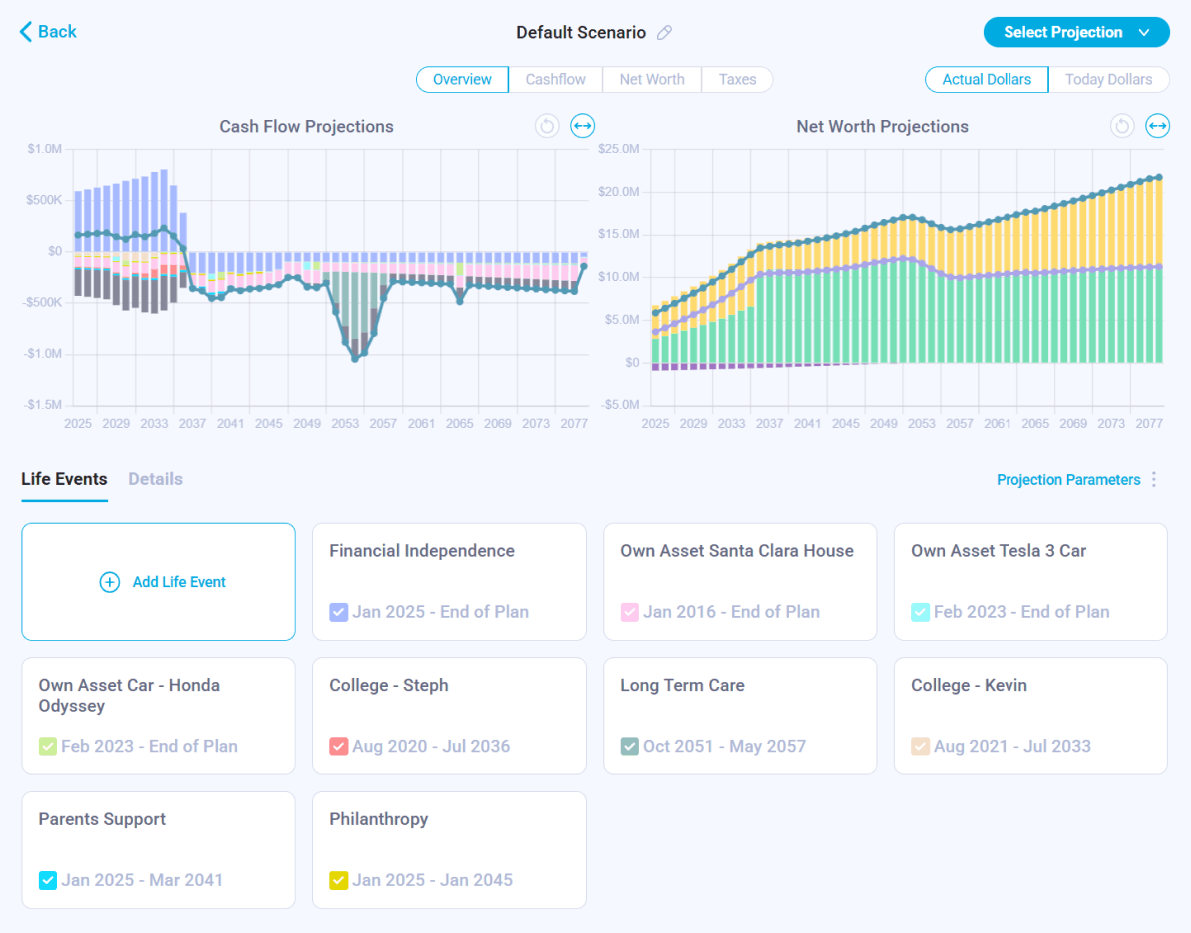
Nauma models your income, health benefits, and HSA contributions together — so you can see exactly how a layoff, voluntary departure, or COBRA election affects your cash flow and long-term financial picture.
Get Started for Free