'%3e%3cpath%20d='M136%2043.0521C135.893%2043.4991%20131.298%2041.3697%20123.51%2041.5186C120.787%2041.5712%20109.626%2040.8001%20104.06%2049.4228C101.316%2053.664%20102.266%2056.2491%20100.601%2061.5769C95.2065%2078.8661%2087.7394%2075.1856%2062.5302%2088.5228C54.5058%2092.764%2045.1595%20101.562%2043.5589%20103.087C31.9403%20114.163%2025.1664%20123.189%2025.1521%20123.171C25.1378%20123.162%2034.1912%20104.357%2047.7676%2082.7655C60.6795%2062.2429%2063.8235%2070.0769%2079.7722%2049.1336C81.7015%2046.6011%2084.8526%2037.6805%2089.683%2036.1032C93.6345%2034.815%2098.6148%2036.6114%20100.065%2038.5568C101.044%2039.8712%20101.459%2040.765%20103.831%2040.4408C110.048%2039.5996%20113.613%2039.8625%20115.492%2039.7748C116.95%2039.7047%20119.751%2039.915%20120.509%2039.9939C130.419%2040.9753%20136.15%2042.4563%20136.007%2043.0434L136%2043.0521Z'%20fill='%23127398'/%3e%3cpath%20d='M22.1867%2043.6392C30.3968%2055.0923%2031.5544%2062.348%2040.6506%2068.6923C45.9954%2072.4253%2053.4839%2075.4134%2058.2928%2075.5361C61.9084%2075.6325%2063.7305%2075.2557%2064.6023%2074.949C64.8524%2074.8614%2065.1025%2074.8351%2065.3597%2074.8263L76.0636%2070.6727C76.8068%2066.8871%2076.1637%2063.4784%2076.1065%2063.1892C75.0561%2058.0103%2072.3337%2053.3835%2070.5402%2051.2542C55.4561%2033.3428%2055.8062%2034.298%2046.5814%2028.0237C26.7884%2014.5902%20-1.22192%2021.3464%200.0428309%2022.0562C0.55016%2022.3454%2010.2394%2026.9634%2022.1867%2043.6392Z'%20fill='%23127398'/%3e%3cpath%20d='M79.8366%2044.0161C81.33%2046.4784%2083.4093%2051.5784%2083.7666%2056.8975C83.7952%2057.3094%2084.1667%2064.0393%2080.4654%2068.4733C78.5004%2070.8217%2076.2281%2071.5403%2075.585%2071.7506C61.487%2076.5264%2028.4319%20116.196%2023.3515%20133.494C23.2229%20133.941%2022.6227%20136.026%2022.5655%20136C22.3797%20135.921%2023.5373%20120.753%2028.925%20106.303C28.925%20106.303%2033.7196%2090.5295%2046.7387%2073.9326C49.1896%2070.8042%2052.8052%2067.0362%2052.8052%2067.0362C54.2414%2065.1434%2059.8006%2068.3068%2066.1887%2068.482C69.9401%2068.5872%2073.2198%2067.6846%2073.2055%2067.3604C73.2055%2067.2377%2073.0698%2067.0712%2072.8911%2066.9047C72.3195%2066.3702%2071.5907%2066.1423%2070.8761%2066.2475C69.9758%2066.379%2068.1323%2066.3877%2064.5738%2065.5903C59.8435%2064.5212%2052.8481%2060.096%2048.0534%2055.364C39.9076%2047.3109%2039.7147%2039.9238%2033.1051%2026.9985C23.4944%208.17586%2014.0767%201.32328%2014.0767%201.32328C17.285%20-1.64734%2041.451%20-0.788575%2059.229%2016.3692C67.5177%2024.3697%2067.2962%2023.3619%2079.8366%2044.0073V44.0161Z'%20fill='%23EF9920'/%3e%3c/g%3e%3cdefs%3e%3cclipPath%20id='clip0_882_3310'%3e%3crect%20width='136'%20height='136'%20fill='white'/%3e%3c/clipPath%3e%3c/defs%3e%3c/svg%3e)
What Is Fair Market Value (FMV) for Private Company Stock?
How FMV Is Determined, Why It Affects Your Taxes, and What It Has to Do with Your Strike Price
Fair market value (FMV) is the price at which a single share of a company's stock would change hands between a willing buyer and a willing seller — with neither under pressure to complete the transaction, and both having reasonable knowledge of the relevant facts. For employees at public companies, FMV is simple: it is the stock price you see on any financial website. For employees at private companies, FMV is invisible by default. There is no ticker, no market quote, no public record. Yet FMV determines two of the most financially significant numbers in your equity grant: the strike price of your stock options, and the taxable income you owe when restricted shares vest or are issued.
Understanding how private companies establish FMV — and why it is almost always lower than the valuation number you hear about when a company raises money — is essential context before you can evaluate any equity offer from a startup or pre-IPO company.
Why Private Companies Can't Look Up Their FMV
Public company stock trades continuously on open exchanges. Every transaction between buyers and sellers reveals the current market price. Private company stock does not trade. There is no exchange, no continuous price discovery, and no transaction record to reference. When a private company grants you stock options, the IRS still requires that the strike price be set at or above the FMV of the common stock on the grant date. Without a public market to reference, the company must formally determine that FMV through an independent process.
This is not optional. Section 409A of the Internal Revenue Code, enacted as part of the American Jobs Creation Act of 2004, requires private companies issuing equity compensation to establish a defensible FMV for their common stock. Options granted below FMV expose employees to immediate income tax on the discount — even before the options are exercised — plus a 20% penalty tax on top of ordinary income rates. The IRS places the compliance burden on the company, but the financial consequences fall on the employee.
How Private Companies Determine FMV: The 409A Valuation
The standard mechanism for establishing FMV for private company common stock is a 409A valuation — an independent appraisal conducted by a qualified third-party firm. When completed by a qualified independent appraiser following IRS guidelines, a 409A valuation gives the company safe harbor status: the IRS presumes the FMV is reasonable, and the burden of proof shifts to the IRS if it wants to challenge the number.
The 409A valuation establishes the FMV of common stock specifically — the class of stock that employees and founders typically hold. This is distinct from the preferred stock that investors receive in funding rounds. See 409A Valuation: What It Is and How It Affects Your Equity for a full explanation of how the appraisal process works, how often valuations must be updated, and what happens when they go stale.
The Key Distinction: FMV vs. Preferred Valuation
The most important thing to understand about private company FMV is that it is not the same as the valuation number reported when a company raises money.
When a startup announces a Series A at a $50 million valuation, that number refers to the company's post-money valuation — the total implied value of the company after the round, based on the price investors paid for preferred shares. Preferred stock comes with rights and protections that common stock does not: liquidation preferences, anti-dilution provisions, and dividend rights that put preferred holders ahead of common holders in nearly every payout scenario.
Because common stock is junior to preferred stock in the capital structure — and because it is illiquid, non-transferable without company approval, and subject to vesting — its FMV is formally lower. A 409A valuation applies discounts for lack of marketability and lack of control to arrive at a common stock value that is a fraction of the preferred stock price.
Based on data from Carta covering thousands of private companies, the typical relationship between 409A valuation and preferred (post-money) valuation by funding stage looks like this:
| Funding Stage | Post-Money Valuation (typical) | 409A as % of Preferred | Implied 409A Valuation |
|---|---|---|---|
| Seed | $18M | ~23% | ~$4M |
| Series A | $50M | ~28% | ~$14M |
| Series B | $105M | ~34% | ~$36M |
| Series C | $286M | ~36% | ~$104M |
The gap narrows at later stages — later-stage companies have more predictable cash flows and more comparable public companies — but the 409A is always lower than the preferred valuation. At the seed stage, the 409A may represent only 20–25% of the post-money valuation.
What this means for you: If a recruiter tells you the company is worth $100 million and you are being granted options at a strike price reflecting that valuation, something is wrong. Your strike price should reflect the 409A FMV of common stock — which at a $100 million preferred valuation might be closer to $28–36 million in common stock value. The difference matters enormously for how much your options are actually worth.
How FMV Affects Your Taxes
FMV appears at multiple points in the equity compensation lifecycle, and getting it wrong — or misunderstanding it — creates tax surprises.
Restricted Stock Awards (RSAs). When you receive an RSA, the FMV of the shares at the time of the grant determines how much ordinary income you owe at vesting — unless you file an 83(b) election within 30 days of the grant to pay tax on the FMV at grant date instead. At very early-stage companies, FMV may be near zero, making the 83(b) election inexpensive. As the company grows and FMV rises, the ordinary income at vesting grows accordingly. See What Is a Restricted Stock Award (RSA)? and 83(b) Election: What It Is and Why It Matters for how this works in practice.
Incentive Stock Options (ISOs). The strike price of your ISOs must equal or exceed the 409A FMV on the grant date. The spread between FMV and your strike price at exercise determines your Alternative Minimum Tax (AMT) exposure — and, for California residents, your state ordinary income tax. See Incentive Stock Options (ISO) in Private Companies for details.
Non-Qualified Stock Options (NSOs). The spread between FMV and strike price at exercise is ordinary income — reported on your W-2 if you are an employee, or on a 1099-NEC if you are a contractor. California taxes this spread at up to 13.3% on top of federal rates. See Non-Qualified Stock Options (NSO) in Private Companies.
Double-Trigger RSUs. In private companies, RSUs typically require both a time-based vesting condition and a liquidity event (IPO or acquisition) before shares are delivered. The FMV at the time of delivery — not at the grant — determines the ordinary income. See RSU in Private Companies: How They Work and Why They're Different.
What to Ask About FMV When Reviewing an Offer
When a private company makes you an equity offer, you should ask directly: what is the current 409A valuation per share? This number — not the post-money preferred valuation — is the relevant benchmark for evaluating your strike price and your taxable exposure.
Specifically, ask:
- What is the current 409A FMV per share of common stock?
- When was the last 409A valuation completed?
- Has there been a funding round or material event since the last valuation? (If yes, the FMV may have changed.)
- What is the most recent preferred share price (the price investors paid in the last round)?
The ratio of your strike price to the 409A FMV tells you whether you are getting fair treatment. A strike price equal to the 409A FMV means no immediate taxable spread. A strike price above FMV means your options are underwater from day one. A strike price below FMV is an IRC 409A violation that could expose you to the 20% penalty tax.
The 409A Validity Window
A 409A valuation is valid for 12 months from its measurement date, or until a material event occurs — whichever comes first. Material events that require a new valuation include closing a funding round, a significant revenue change, an acquisition offer, or any other event that would cause a reasonable buyer to reassess the company's value.
If a company has not updated its 409A in more than 12 months, or if a funding round has closed since the last valuation, the FMV supporting your strike price may be stale. Options granted against a stale valuation lose the safe harbor protection and expose both the company and the employee to IRS scrutiny. This is worth asking about, especially at companies that have been active in raising money.
California Note
California does not have a separate state-level FMV determination process — it conforms to the federal 409A framework for purposes of setting strike prices. However, California taxes all equity income as ordinary income at the state level, with no capital gains preference and marginal rates up to 13.3%. When FMV rises significantly between your grant date and your exercise or vesting date, the resulting ordinary income is taxed at combined federal and California rates that can reach 50% or more for senior employees.
This makes the timing of FMV — and the decisions you make around it, including the 83(b) election and early exercise — especially consequential for California residents. See Equity Compensation & Taxes: What Tech Workers in Private Companies Need to Know for a full breakdown of the tax math.
This article is for educational purposes only and does not constitute tax, legal, or financial advice. FMV determinations and Section 409A rules are complex and fact-specific. Always consult a qualified tax advisor before making decisions about exercising options, filing an 83(b) election, or accepting an equity offer.
Frequently Asked Questions
See How Your Equity Fits Into Your Full Financial Picture
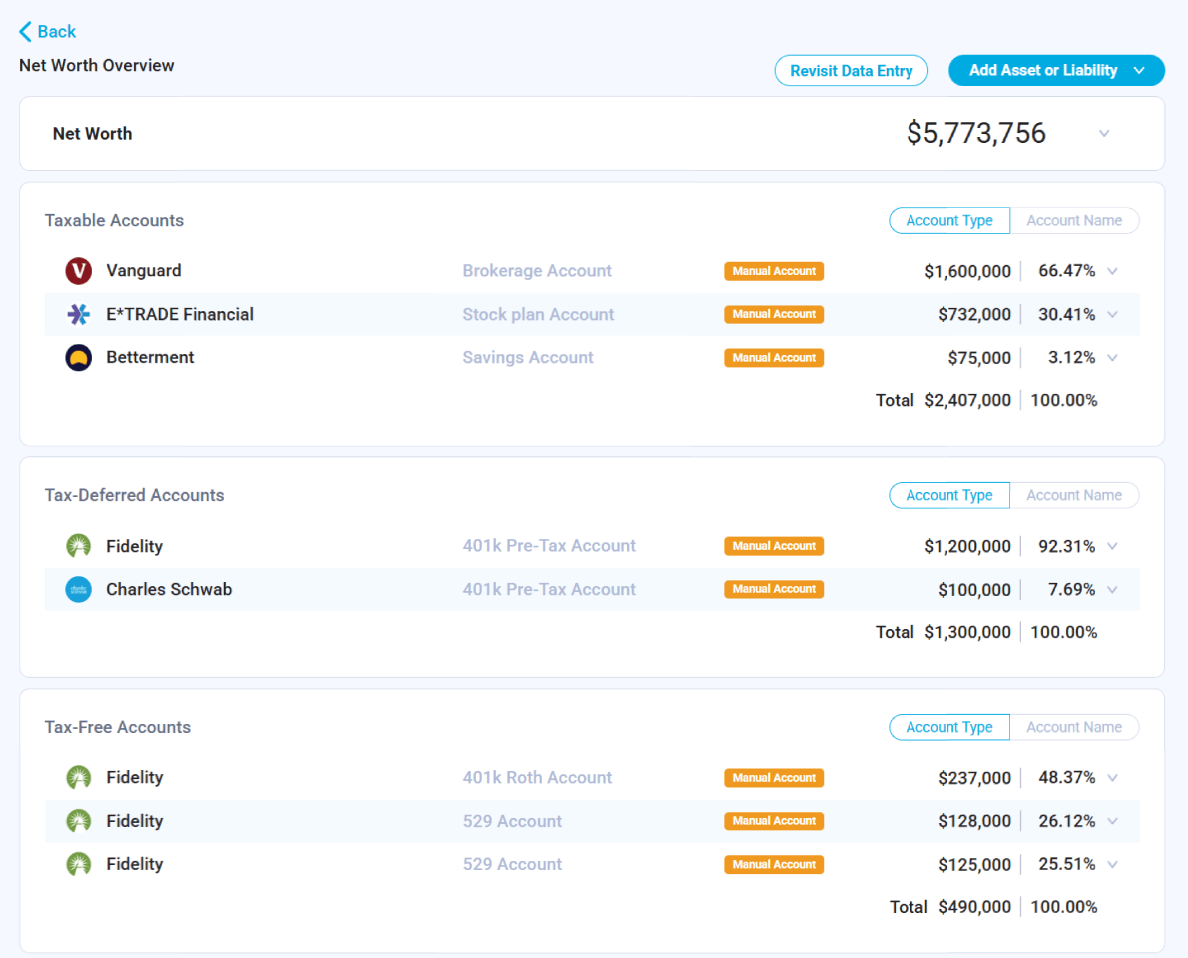
Nauma models your private company equity alongside your salary, tax situation, and retirement accounts — so you can see exactly what your options are worth, when to exercise, and how each decision affects your long-term plan.
Get Started for Free